


Pen And Gear represents Walmart’s strategic entry into the office supplies market, positioning itself as a reliable private-label brand that delivers essential stationery and office equipment at accessible price points. Launched as part of Walmart’s broader initiative to offer quality alternatives to name-brand products, Pen And Gear has carved out a significant niche in the document management sector, particularly with its line of paper shredders.
The brand philosophy centers on democratizing office solutions by making them affordable without sacrificing fundamental functionality. In an era where identity theft and data breaches have become increasingly prevalent, Pen And Gear recognizes that document security should not be a luxury reserved for corporations with substantial budgets. Instead, the brand aims to provide practical, no-frills solutions that empower everyday consumers to protect their sensitive information.
Within the paper shredder market, Pen And Gear occupies a distinctive position as a budget-friendly entry point. While it may not compete with premium brands like Fellowes or AmazonBasics in terms of advanced features or heavy-duty performance, it successfully addresses the needs of cost-conscious consumers who require basic document destruction capabilities. The brand has established itself as a go-to option for those making their first shredder purchase or seeking a supplementary device for light-duty use.
Pen+Gear Shredder Collection — Secure, Efficient, and Reliable for Every Workspace
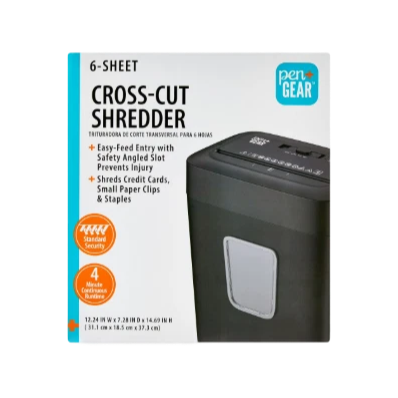
Pen+Gear 6-Sheet Cross-Cut Paper/Credit Card Shredder
Price: $29.97
Efficient & Secure Shredding
Enjoy powerful document protection with the Pen+Gear 6-Sheet Cross-Cut Shredder. It easily shreds up to 6 sheets at once, including credit cards, staples, and small paper clips. The cross-cut design transforms paper into small confetti-sized pieces (3/16″ x 31/32″), achieving a P-4 security level for peace of mind.
Convenience & Safety Built-In
Operate continuously for up to 4 minutes with a spacious 3.7-gallon bin that minimizes interruptions. Safety is prioritized with an angled entry slot, LED status indicators, and overload protection. The lift-head bin and single-hand handle ensure effortless emptying after use.
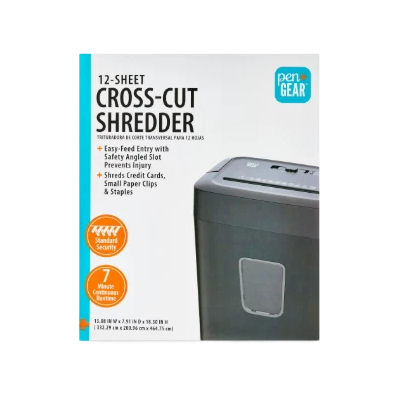
Pen+Gear 12-Sheet Cross-Cut Paper/Credit Card Shredder
Price: $59.00
High-Capacity Security
Efficiently destroy sensitive materials with this 12-sheet cross-cut shredder that’s capable of handling paper, staples, paper clips, and credit cards. The P-4 security level ensures your documents are thoroughly destroyed, protecting your personal information.
Built for Performance & Safety
Enjoy up to 7 minutes of continuous shredding, followed by a 30-minute cool-down period. A 5.5-gallon wastebasket holds more, reducing emptying frequency. Equipped with LED indicators, overload protection, and auto start/manual reverse, this shredder makes security simple and safe.
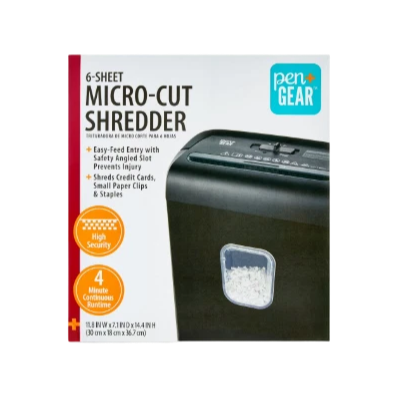
Pen+Gear 6-Sheet Micro-Cut Paper/Credit Card Shredder
Price: $52.82
Compact Power, Maximum Security
This micro-cut shredder delivers advanced protection, slicing your confidential documents into ultra-small particles for a higher level of privacy. Its 6-sheet capacity makes it perfect for light home or office use.
Smart Design & Easy Maintenance
Operating for up to 4 minutes continuously, it includes a convenient 3.4-gallon bin with a lift handle. The compact size (11.81″ x 7.09″ x 14.45″) fits easily under desks, while overheat protection and jam-clear functions ensure reliable performance.
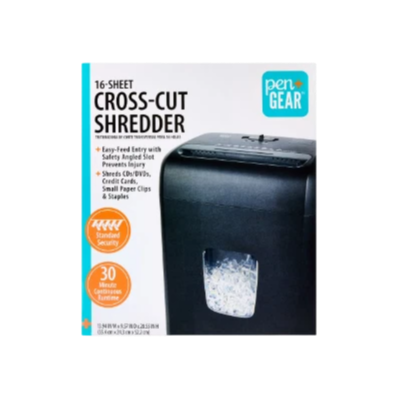
Pen+Gear 16-Sheet Cross-Cut Paper, CD, & DVD Shredder
Price: $108.00
Versatile Heavy-Duty Shredding
Handle large shredding tasks with ease using this 16-sheet cross-cut shredder. It efficiently destroys paper, CDs, DVDs, credit cards, and more — ideal for offices that handle large volumes of sensitive information.
Durable Design & User-Friendly Mobility
Featuring a 5.3-gallon collection bin and four rolling casters, this model makes cleanup simple and transport effortless. Continuous 30-minute operation, jam prevention mode, and robust construction ensure both convenience and confidence in every use.
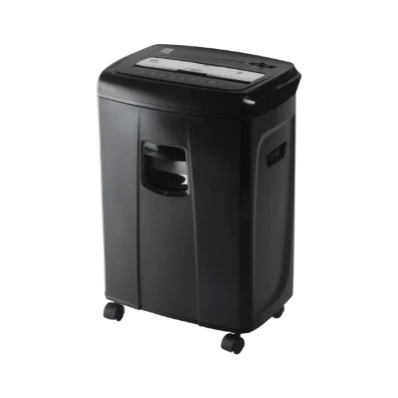
Pen+Gear 8-Sheet Micro-Cut Shredder with Pullout Basket
Price: $74.61
Privacy-Focused Shredding
This shredder delivers advanced micro-cut security, reducing documents to 5/32″ x 15/32″ confetti-like particles that meet the P-4 security standard. It shreds up to 8 sheets at once, including small office essentials like staples and credit cards.
Smart Features & Ergonomic Design
LED indicators show power, overload, and bin-full statuses for instant feedback. Auto start/stop and manual reverse functions prevent jams, while the 3.7-gallon pullout basket with casters offers effortless mobility and quick disposal.
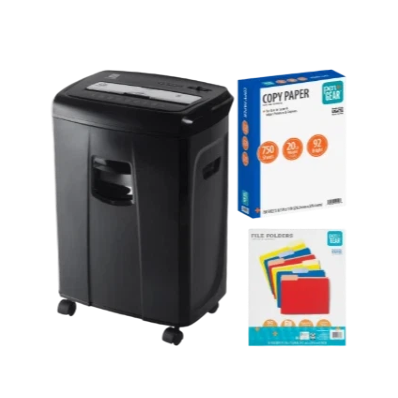
Pen+Gear 8-Sheet Micro-Cut Shredder with Copy Paper and File Folders
Price: $95.13
Complete Shredding Package
More than just a shredder, this set includes copy paper and file folders — everything you need to organize and destroy sensitive materials efficiently. Achieving a P-4 security level, it shreds up to 8 sheets simultaneously into tiny confetti-like particles.
Enhanced Protection & Convenience
Automatic start/stop controls, manual reverse, and overload protection make operation safe and hassle-free. The sturdy pullout basket and mobile casters simplify bin emptying, while Shred Safe auto power-off ensures safety when detecting forced entry.
Product Series Introduction
The Pen And Gear shredder product line encompasses several models designed to accommodate varying user needs and space constraints. The lineup typically includes compact personal shredders suitable for individual use, mid-size models appropriate for small families or home offices, and slightly larger units that can handle the demands of small business environments.
Primary models in the range feature either strip-cut or cross-cut shredding mechanisms, with cross-cut variants offering enhanced security for users concerned about document reconstruction. The typical specifications across the product line include capacities ranging from six to eight sheets per pass, modest waste bin sizes between three and five gallons, and straightforward control systems that prioritize ease of use over complex functionality.
The target demographic for Pen And Gear shredders encompasses three primary user groups. Home users constitute the largest segment, seeking affordable solutions to destroy financial statements, medical records, and junk mail containing personal information. Small office environments represent another key market, particularly startups, freelancers, and micro-businesses that need basic document security without enterprise-level investment. Finally, students and young professionals living in apartments or dormitories appreciate the compact designs and budget-friendly pricing that align with their spatial and financial constraints.
Core Functional Characteristics
Shredding Capabilities
Pen And Gear shredders employ two primary cutting methodologies. Strip-cut models utilize parallel blades that slice documents into long vertical strips, typically measuring between five and seven millimeters in width. While this approach offers faster shredding and can sometimes handle slightly higher sheet capacities, it provides minimal security against determined attempts at document reconstruction. Cross-cut models, conversely, employ perpendicular blade sets that transform paper into small rectangular particles, significantly enhancing security by making reassembly virtually impossible for casual observers.
The standard sheet capacity across most Pen And Gear models ranges from six to eight sheets of standard twenty-pound copy paper per pass. This specification assumes properly separated, unfolded sheets fed directly into the throat opening. Users should note that heavier paper stocks, such as cardstock or glossy brochures, will reduce effective capacity and should typically be fed individually to prevent jamming.
Beyond standard paper, many Pen And Gear shredders can accommodate supplementary materials that require destruction. Credit cards, store loyalty cards, and similar plastic cards can usually be processed, though users should consult their specific model’s manual to confirm this capability. Some units also handle staples and small paper clips without requiring prior removal, though this feature varies by model. However, these shredders are not designed to process laminated documents, CDs, DVDs, or heavy binder clips, which can damage the cutting mechanism.
The resulting shred size depends on the cutting method employed. Strip-cut models produce pieces approximately five to seven millimeters wide and the full length of the original document. Cross-cut versions generate confetti-like particles typically measuring around four by fifty millimeters, though exact dimensions vary by model.
Security Level
Document security ratings follow the Deutsches Institut für Normung (DIN) classification system, which assigns security levels based on the size and volume of shredded particles. Most Pen And Gear shredders achieve either P-3 or P-4 security ratings under this standard. P-3 classification indicates strip widths not exceeding two millimeters or particle sizes smaller than 320 square millimeters, suitable for internal business documents and general confidential materials. P-4 rating requires particles smaller than 160 square millimeters, appropriate for confidential documents requiring elevated protection.
For typical home users concerned primarily with preventing casual identity theft from discarded mail and financial statements, P-3 level security proves entirely adequate. The effort required to reconstruct documents shredded to this specification far exceeds the value most identity thieves would derive from the information, effectively deterring opportunistic crimes. Small businesses handling customer information, medical records, or proprietary documents may prefer P-4 rated cross-cut models for additional peace of mind, though neither rating meets the stringent requirements for classified government or highly sensitive corporate documents.
The practical privacy protection these shredders provide extends to various scenarios. Financial documents including bank statements, credit card offers, and tax records become unreadable when properly shredded. Pre-approved credit applications and insurance documents lose their utility to potential fraudsters. Even everyday items like shipping labels, prescription bottles, and travel itineraries that contain personal details can be safely destroyed, reducing the overall exposure of your personal information ecosystem.
Equipment Specifications
The typical Pen And Gear shredder employs a modest electric motor rated between 150 and 250 watts, sufficient for the intermittent-duty cycle these devices are designed to handle. This motor configuration balances adequate cutting power with energy efficiency and cost-effectiveness, recognizing that target users rarely require sustained high-volume shredding capabilities.
Shredding speed varies by model and cutting method but generally ranges from five to eight feet per minute. While substantially slower than commercial-grade equipment, this pace proves acceptable for home and light office use where users typically process occasional batches rather than continuous streams of documents. The deliberate feed rate also reduces the likelihood of jams and extends the operational lifespan of cutting components.
Waste receptacle capacity typically falls between three and five gallons, accommodating approximately 150 to 250 sheets worth of shredded material depending on the cutting method employed. Cross-cut particles compress more efficiently than strip-cut strands, allowing slightly higher effective capacity. The translucent or partially transparent bin design enables users to monitor fill levels and empty the container before it reaches maximum capacity, preventing overflow and potential motor strain.
Physical dimensions vary across the product line, but most models measure approximately twelve to fifteen inches in width, eight to ten inches in depth, and fifteen to eighteen inches in height. Weight ranges from eight to twelve pounds, light enough for easy repositioning but substantial enough to remain stable during operation. These compact proportions allow the shredder to fit beneath most desks, on credenzas, or in closets when not in use, addressing the space constraints common in home and small office environments.
Continuous operation time represents a critical specification often overlooked by first-time buyers. Pen And Gear shredders typically support two to three minutes of continuous shredding before requiring a cooling period of twenty to thirty minutes. This duty cycle proves adequate for processing daily mail or occasional document batches but can frustrate users attempting to clear large backlogs of accumulated paperwork in single sessions.
Design and User Experience
Appearance Design
Pen And Gear shredders embrace a minimalist aesthetic that prioritizes function over form, reflecting their positioning as practical tools rather than decorative office accessories. The clean lines and unadorned surfaces contribute to a professional appearance that integrates seamlessly into various environments without drawing undue attention. This utilitarian design philosophy also simplifies manufacturing and keeps costs manageable, directly benefiting budget-conscious consumers.
Black dominates the color palette across the product line, occasionally accented with gray or silver trim elements. This monochromatic scheme offers practical advantages beyond mere aesthetics, as dark surfaces better conceal dust and minor scuffs that accumulate through regular use. The neutral appearance also ensures compatibility with diverse décor schemes, from traditional home offices to contemporary workspaces.
Compact engineering distinguishes Pen And Gear shredders from bulkier alternatives, making them particularly appealing for users contending with limited floor space. The relatively narrow footprint allows placement in tight corners, under desks, or within closets, while the moderate height permits storage beneath standard work surfaces. This space efficiency proves especially valuable for apartment dwellers, dormitory residents, and small businesses operating from converted residential spaces.
Operational Convenience
The control interface on Pen And Gear shredders exemplifies straightforward design, typically featuring a simple three-position switch governing Auto, Off, and Reverse functions. This uncomplicated system eliminates the learning curve associated with more feature-laden models, allowing users to begin shredding immediately upon unboxing without consulting extensive manuals or navigating complex menu systems.
The Auto mode incorporates infrared sensors that detect paper insertion, automatically engaging the cutting mechanism when documents enter the throat and stopping once shredding completes. This hands-free operation enhances safety by eliminating the need to manually activate the device while positioning paper, reducing the risk of finger contact with moving components. The automatic start-stop functionality also conserves energy by preventing unnecessary motor operation between shredding tasks.
Reverse capability addresses the inevitable jams that occur even with careful use, allowing users to quickly extract improperly fed documents without requiring physical disassembly. When paper becomes wedged in the cutting mechanism, activating reverse mode rotates the blades backward, gently releasing the obstruction. This feature proves particularly valuable when users accidentally exceed the maximum sheet capacity or attempt to shred incompatible materials, preventing minor mistakes from escalating into frustrating maintenance ordeals.
The transparent or semi-transparent waste bin window provides visual feedback regarding fill levels, enabling proactive emptying before capacity is reached. This seemingly minor design element prevents the common scenario where users continue feeding documents into an overfilled receptacle, creating unsightly messes and potentially damaging the device. The clear sightline to the bin interior also helps users identify jams or unusual accumulations that might indicate improper operation.
Safety Protection Features
Thermal protection mechanisms automatically disengage power when internal temperatures exceed safe operational thresholds, typically triggered by prolonged continuous use beyond the specified duty cycle. This failsafe prevents motor burnout and reduces fire hazards, though it necessitates cooling periods that some users find inconvenient. The thermal cutoff generally resets automatically once temperatures normalize, requiring no user intervention beyond patience.
Child safety considerations inform several design elements, though Pen And Gear shredders lack the sophisticated proximity sensors found in premium models. The elevated throat opening positions cutting components beyond the easy reach of toddlers, while the requirement for deliberate paper insertion provides some deterrent against curious young fingers. However, parents should still exercise caution and consider positioning the device in areas inaccessible to unsupervised children, as the basic safety features do not constitute foolproof protection against all potential accidents.
Overload protection circuits monitor current draw and disengage power when the motor labors excessively, typically indicating that users have exceeded the recommended sheet capacity or attempted to shred incompatible materials. This safeguard extends the equipment lifespan by preventing mechanical damage to cutting components and drive systems, though it requires users to reduce load and potentially utilize the reverse function to clear the obstruction.
Practical Usage Scenarios
Home Use
Residential environments generate substantial quantities of documents containing sensitive personal information that require secure destruction. Financial paperwork including bank statements, credit card bills, investment reports, and tax documents accumulate monthly, each containing account numbers, transaction histories, and other data valuable to identity thieves. Pen And Gear shredders enable homeowners to routinely destroy these materials immediately after reviewing them, eliminating the accumulation of vulnerable documents in household trash receptacles.
Pre-approved credit offers and insurance solicitations represent particularly problematic mail categories, as they often include partially completed applications bearing the recipient’s name, address, and other identifying information. Fraudsters can exploit these documents to open unauthorized accounts or access existing financial relationships. Regular shredding of such correspondence significantly reduces this exposure, transforming potentially dangerous documents into unreadable confetti.
Beyond financial materials, various household documents merit destruction to protect privacy. Shipping labels from online purchases reveal buying habits and establish periods when homes likely stand empty. Prescription bottles and medical correspondence expose health conditions and treatment regimens. Travel itineraries and boarding passes document absence from residences. By shredding these seemingly innocuous items, families construct comprehensive privacy protection that extends beyond obvious financial targets.
Small Office Application
Micro-businesses, freelancers, and home-based enterprises face data protection obligations despite their modest scales. Client information including contact details, project specifications, and payment records must be safeguarded not only for ethical reasons but also to maintain professional reputations and comply with various privacy regulations. Pen And Gear shredders provide an affordable means for small operations to implement document destruction protocols without investing in expensive commercial equipment.
Daily operational paperwork accumulates quickly in office environments. Printing errors, outdated drafts, internal memos, and superseded versions of documents all contain information best not preserved indefinitely. Regular shredding of such materials prevents accidental disclosure while also reducing clutter and improving organizational efficiency. The modest capacity of Pen And Gear units proves adequate for this maintenance-level destruction, handling the steady trickle of sensitive waste generated by small teams.
While Pen And Gear shredders may not satisfy rigorous compliance requirements for regulated industries handling protected health information or financial services data, they meet basic data security expectations for general small businesses. The cross-cut models particularly offer sufficient protection for customer lists, vendor agreements, employment records, and similar business documents, establishing a foundation of security consciousness that can scale as operations grow.
Student Dormitory Use
College students and young professionals living in shared housing arrangements face unique privacy challenges. Communal living spaces and shared waste disposal systems mean that discarded documents may be accessible to roommates, suitemates, or anyone with access to common areas. A personal shredder provides control over sensitive materials without requiring navigation of complex social dynamics around privacy expectations.
Academic life generates various documents warranting destruction. Old assignments and examinations may contain student identification numbers or personal reflections. Application materials for internships or graduate programs include social security numbers and employment histories. Financial aid paperwork details family financial situations. Rather than allowing these materials to accumulate or disposing of them intact, students can discretely shred them, maintaining privacy in environments where personal space is limited.
The compact footprint and budget-friendly pricing of Pen And Gear shredders align particularly well with student needs and constraints. Dormitory rooms rarely offer abundant space for non-essential equipment, making the slim profile of these units attractive. Limited student budgets also favor the accessible price points, allowing young adults to implement adult privacy practices without significant financial burden. The straightforward operation requires no technical expertise, accommodating users potentially operating their first such device.
Product Advantages Analysis
Cost-Effectiveness Advantage
Price competitiveness represents the most compelling advantage Pen And Gear shredders offer relative to competing products. Typical retail prices range from twenty to forty dollars depending on specific model and features, positioning these devices substantially below name-brand alternatives that often command premiums of fifty to one hundred percent for comparable specifications. This aggressive pricing strategy directly serves Walmart’s value proposition, delivering functional products at accessible price points.
The basic feature set, while modest compared to premium offerings, adequately addresses the needs of target consumers. Most home users and small offices require only fundamental shredding capabilities rather than advanced functions like automatic feeders, jam-proof technology, or commercial-grade duty cycles. By focusing resources on core functionality and omitting superfluous features, Pen And Gear delivers appropriate solutions without imposing costs for capabilities users neither need nor want.
Distribution through Walmart’s extensive retail network provides unmatched purchasing convenience. Consumers can examine physical units before purchase, consult with store associates, and take immediate possession rather than awaiting delivery. The widespread store footprint means most shoppers live within reasonable distance of a purchase location, while Walmart’s robust online platform offers alternative acquisition methods for those preferring delivery. This omnichannel availability reduces friction in the buying process, particularly valuable for impulse purchases or urgent replacement needs.
Practical Features
Operational simplicity distinguishes Pen And Gear shredders from more complex alternatives that may intimidate less technically inclined users. The straightforward switch controls and automatic sensing eliminate setup procedures, software configuration, or calibration requirements. Users simply plug in the device, position it conveniently, and begin shredding—a user experience that respects the reality that shredders represent tools rather than hobbies deserving extensive learning investments.
Maintenance demands remain minimal throughout the product lifecycle. Unlike some competing devices requiring frequent lubrication, filter cleaning, or blade sharpening, Pen And Gear shredders generally operate reliably with only periodic waste bin emptying and occasional application of shredder lubricant sheets. This low-maintenance profile appeals to busy users who lack time or inclination for elaborate equipment care routines, ensuring the device remains useful rather than becoming another neglected purchase.
The performance envelope suits light to moderate usage patterns typical of home and small office environments. While users processing large document volumes daily will quickly encounter duty cycle limitations, those shredding occasional batches of mail or periodic file purges will find the capabilities entirely adequate. Understanding and respecting these limitations allows users to extract years of reliable service from modest investments.
Reliability Performance
The cutting blade system, though not featuring exotic materials or advanced geometries found in premium shredders, demonstrates acceptable durability under appropriate usage conditions. Hardened steel blades maintain adequate sharpness through thousands of sheets when users avoid prohibited materials and observe capacity limits. While eventual degradation occurs, the typical lifespan often exceeds the economic value of the device, making replacement rather than blade servicing the rational choice when performance deteriorates.
Motor performance remains consistent throughout the product life when thermal and overload protections are heeded. The modest power rating proves adequate for the intended intermittent duty cycle, and the conservative specifications reduce stress on electrical components. Users report operational lifespans ranging from two to five years under typical residential usage—a reasonable return considering the initial investment.
Warranty coverage varies by specific model but typically includes one-year limited protection against manufacturing defects. While less generous than extended warranties accompanying premium products, this coverage aligns with price expectations and provides recourse against premature failures. Walmart’s generous return policies also offer additional protection during the initial usage period, reducing risk for uncertain buyers.
Usage Precautions and Maintenance
Proper Usage Methods
Respecting sheet capacity limits represents the single most important practice for preventing jams and extending equipment life. While manufacturers specify maximum capacities, conservative users should initially feed somewhat fewer sheets to account for variations in paper weight, humidity effects on paper, and individual device tolerances. Gradually approaching but not exceeding stated capacities as familiarity develops prevents frustrating early experiences that might discourage continued use.
Certain materials absolutely must not enter the shredder throat. Laminated documents, with their plastic coating bonded to paper, can melt from friction heat and coat cutting components with stubborn residue requiring extensive cleaning. CDs and DVDs, despite plastic composition, possess hardness and brittleness that can chip or damage blades. Heavy binder clips exceed the strength of consumer-grade cutting mechanisms. Glossy or coated papers should be fed individually rather than in batches. Adhesive materials like sticky notes or tape can gum up blade gaps, necessitating manual cleaning.
Continuous operation must respect stated duty cycle limitations to prevent thermal shutdown and potential motor damage. Users processing large document accumulations should work in batches, allowing cooling periods between sessions. Planning ahead for periodic file purges rather than attempting marathon shredding sessions prevents frustration and equipment stress. For truly massive destruction projects, consider professional shredding services that possess commercial-grade equipment designed for sustained high-volume operation.
Common Problem Resolution
Paper jams, while frustrating, typically resolve easily when approached systematically. First, switch the device to Off position to ensure safety. Next, engage Reverse mode briefly to determine whether the obstruction will release with backward blade rotation. If paper remains wedged, unplug the device and carefully remove the cutting head assembly according to manufacturer instructions. With the power disconnected, manually extract visible paper fragments using tools rather than fingers, as blade edges retain sharpness even when motionless. After clearing the jam, check the waste bin level, as overfilling often contributes to feed problems.
Blade maintenance primarily consists of periodic lubrication to prevent buildup of paper dust and residual adhesives that impede cutting efficiency. Specialized shredder lubricant sheets, available from office supply retailers, provide the most convenient application method. Users simply feed these pre-treated papers through the device like normal documents, distributing lubricant across blade surfaces. Alternatively, a small amount of vegetable oil applied to scrap paper achieves similar results, though proprietary lubricants often include additional agents that condition metal and repel dust.
Overheating situations require only patience rather than intervention. When thermal protection engages, simply switch the device off and allow thirty to sixty minutes for temperature normalization before attempting operation. If overheating occurs frequently despite respecting duty cycles, verify adequate ventilation around the motor housing and ensure ambient temperature remains reasonable. Persistent thermal problems despite appropriate usage may indicate impending motor failure warranting replacement consideration.
Daily Maintenance Recommendations
Regular waste bin emptying prevents numerous problems while maintaining optimal performance. Beyond the obvious issue of overflow, excessive fill levels force the motor to work harder, accelerating wear and increasing jam likelihood. Empty the bin when approximately seventy-five percent full rather than waiting for complete capacity, and use this opportunity to inspect for unusual accumulations that might indicate improper operation.
Blade lubrication every dozen hours of actual operation, or monthly for typical home users, maintains cutting efficiency and prevents oxidation. This preventive measure costs mere pennies per application while substantially extending equipment life. Consider establishing a regular schedule, perhaps coordinating with other household maintenance tasks, to ensure lubrication occurs consistently rather than only when performance noticeably degrades.
External cleaning requires only occasional attention but contributes to professional appearance and longevity. Wipe down exterior surfaces with slightly damp cloth to remove dust and fingerprints, avoiding excessive moisture near electrical components. Vacuum or brush away paper dust from ventilation grilles and around the waste bin interface. This minimal housekeeping preserves aesthetic appeal while ensuring adequate airflow for cooling.
Purchasing Guide
Selecting Appropriate Models
Usage frequency should primarily guide model selection. Light users processing only weekly mail accumulations can adequately serve their needs with basic strip-cut models offering minimal security but maximum simplicity and lower cost. Moderate users shredding several times weekly benefit from cross-cut versions that provide enhanced security without significant price increases. Heavy users destroying documents daily should honestly evaluate whether entry-level Pen And Gear models suit their needs or whether investing in more robust equipment better serves long-term requirements.
Security needs vary considerably among users, making cutting method an important consideration. Those primarily destroying routine correspondence and junk mail may find strip-cut adequate, as the effort required for reconstruction exceeds the value of information contained. Users processing financial documents, medical records, or business information should strongly prefer cross-cut models that render reconstruction practically impossible without forensic resources. The modest price difference between cutting methods rarely justifies accepting inadequate security when privacy truly matters.
Space constraints influence both model selection and realistic usage expectations. Measure available placement locations before shopping, considering not only floor space but also clearance for opening lids and removing waste bins. Taller units may not fit beneath desks despite acceptable footprints. Remember that shredders require ventilation clearance around motor housings, so tight enclosures may contribute to overheating issues.
Purchase Channels
Walmart retail locations provide the traditional purchasing experience, allowing hands-on inspection before commitment. Visiting stores enables comparison of different models, evaluation of build quality, and consultation with associates regarding feature differences. Physical retail also accommodates immediate possession, valuable when replacing failed equipment or responding to urgent privacy concerns. Store inventory, however, may be limited to bestselling models, potentially excluding specialized variants.
Walmart’s online platform expands selection beyond store inventory while preserving price consistency and return policies. The website typically stocks the full Pen And Gear shredder range, including models unavailable in physical locations due to space constraints. Customer reviews provide insights from actual users, helping prospective buyers understand real-world performance beyond marketing claims. Home delivery eliminates transportation hassles for these moderately heavy items, though immediate availability disappears.
Third-party e-commerce platforms occasionally carry Pen And Gear products, though availability proves inconsistent and pricing may exceed Walmart’s direct channels. These alternatives sometimes prove useful when seeking discontinued models or taking advantage of marketplace promotions, but buyers should verify seller legitimacy and understand that Walmart’s return policies may not apply to reseller purchases.
Price Range
Entry-level Pen And Gear shredders typically retail between twenty and thirty dollars, representing the strip-cut personal models suitable for very light home use. These bare-bones units deliver basic destruction capabilities without security enhancements or convenience features, targeting extremely price-sensitive buyers or those testing whether they’ll actually use such equipment.
Mid-range offerings, primarily cross-cut models with modest capacity increases and better build quality, occupy the thirty to forty dollar segment. This range represents the sweet spot for most consumers, balancing adequate security and performance with accessible pricing. The incremental cost over entry models purchases meaningful improvements in privacy protection and user experience.
Seasonal promotions, particularly during back-to-school periods and end-of-year holidays, often reduce prices by twenty to thirty percent. Savvy shoppers can secure meaningful savings by timing purchases around these predictable sales events. However, specific model availability may narrow during promotions as retailers emphasize selected SKUs, requiring flexibility in exact model preferences.
User Reviews and Feedback
Strengths Summary
Users consistently praise Pen And Gear shredders for delivering reliable basic functionality at accessible prices. The straightforward operation resonates with consumers seeking uncomplicated solutions rather than feature-rich devices requiring learning investments. Many reviewers specifically note satisfaction that the product performs as advertised without surprises or hidden limitations, establishing appropriate expectations that the device subsequently meets.
Performance adequacy for typical home and light office applications emerges as another common theme in positive reviews. Users processing modest document volumes appreciate that these shredders handle routine destruction tasks reliably when limitations are respected. The cross-cut models particularly receive praise for transforming sensitive documents into truly unreadable particles, providing peace of mind regarding privacy protection.
Initial user experience quality impresses many buyers, with numerous reviews noting that setup requires only removing packaging and plugging in the device before immediate operation. This instant gratification contrasts favorably with more complex equipment demanding assembly, calibration, or configuration. First-time shredder buyers especially appreciate the gentle learning curve that builds confidence rather than intimidation.
Common Criticisms
Noise levels during operation frustrate some users, particularly those with heightened sensitivity to mechanical sounds or operating devices in quiet environments. The grinding and crunching of paper destruction inherently generates substantial sound, though Pen And Gear models may produce slightly more noise than premium alternatives featuring superior motor mounts and acoustic dampening. Users in shared living or working spaces should consider operational hours to minimize disruption to others.
Duty cycle limitations disappoint users who purchased without fully understanding intermittent-use specifications or who accumulated large document backlogs requiring extensive destruction sessions. The automatic thermal shutdown, while protecting equipment, interrupts workflow and extends overall task completion time. Some reviewers express frustration that marketing materials insufficiently emphasize these operational constraints, leading to unmet expectations.
Performance gaps relative to premium products become apparent to users with direct comparison experience or those subsequently upgrading to more expensive equipment. While Pen And Gear shredders adequately serve their target market, they lack the refined engineering, advanced features, and robust construction of models costing two to three times more. Users seeking commercial-grade capabilities inevitably find these consumer-oriented devices lacking, though such criticisms often reflect unrealistic expectations given the price point.
User Type Recommendations
Pen And Gear shredders ideally suit home users with modest, intermittent shredding needs—processing weekly mail, quarterly financial statement purges, and occasional privacy-sensitive document destruction. First-time buyers uncertain about their long-term usage patterns benefit from the minimal financial commitment, gaining practical experience before potentially upgrading to more capable equipment. Students and young professionals establishing initial households appreciate the accessible pricing and compact designs that accommodate limited budgets and space.
Conversely, these devices prove unsuitable for sustained high-volume applications or users with daily destruction requirements. Small businesses processing customer information continuously, legal practices managing client files, or medical offices handling patient records should invest in commercial-grade equipment designed for intensive duty cycles. Users in regulated industries with specific data destruction standards should verify that consumer shredders meet compliance requirements, as many applications demand capabilities beyond Pen And Gear specifications.
Alternative products merit consideration in several scenarios. Users requiring truly silent operation should explore premium models featuring acoustic engineering and advanced motor isolation. Those needing jam-proof reliability for hassle-free operation should consider auto-feed shredders that mechanically control document presentation. High-volume users should investigate commercial equipment with substantially longer duty cycles and larger waste capacities, accepting higher prices as necessary investments in appropriate tools for demanding applications.
Environmental and Sustainability Considerations
Shredded Paper Recycling
Shredded paper generally remains recyclable, though handling differs from intact sheets. The shortened fibers resulting from destruction reduce quality for premium paper production but remain suitable for various recycled products including newsprint, cardboard, and paper towels. However, many municipal recycling programs either exclude or request special handling for shredded paper due to processing complications.
The small particle size of cross-cut shred can escape sorting equipment, contaminating other recyclable streams or creating operational problems at processing facilities. Some programs request that shredded paper be contained in paper bags rather than mixed loosely with other recyclables. Strip-cut shred, with longer strands, sometimes proves more acceptable to recycling operations, though this varies by facility.
Beyond traditional recycling, shredded paper finds numerous practical secondary uses. Gardeners incorporate it into compost systems where it provides carbon-rich brown material balancing nitrogen-rich green waste. Pet owners utilize it as affordable bedding for small animals like hamsters and guinea pigs. Shredded paper serves as effective packing material for shipping fragile items, providing cushioning while avoiding foam peanuts. Creative individuals employ it for paper-mâché projects and craft applications. These alternative uses extend material lifespan while reducing waste stream volume.
Energy Performance
Standby power consumption for Pen And Gear shredders remains minimal, typically under one watt when switched to Auto mode awaiting paper insertion. The low phantom load reflects simple electronic sensing circuits rather than complex control systems maintaining continuous readiness. Users concerned about minimizing energy use can switch devices fully off when not actively shredding, eliminating even trivial standby consumption.
Operational energy efficiency proves reasonable given the modest motor ratings and intermittent usage patterns. A typical shredding session consuming two minutes of actual motor runtime draws approximately 150 to 250 watts, totaling only five to eight watt-hours of energy. Even users shredding daily would accumulate monthly electricity costs well under one dollar at typical residential rates. The environmental impact of operation remains negligible compared to other household electrical loads.
The limited duty cycle, while frustrating for some applications, paradoxically benefits energy efficiency by preventing extended continuous operation. Users automatically pause between shredding sessions, eliminating unnecessary motor runtime. This enforced intermittent use pattern minimizes overall electricity consumption while simultaneously reducing thermal stress on components, contributing to extended equipment lifespan that reduces embodied energy impacts from premature replacement.